Speaking
Clear Language for Complex Experiences
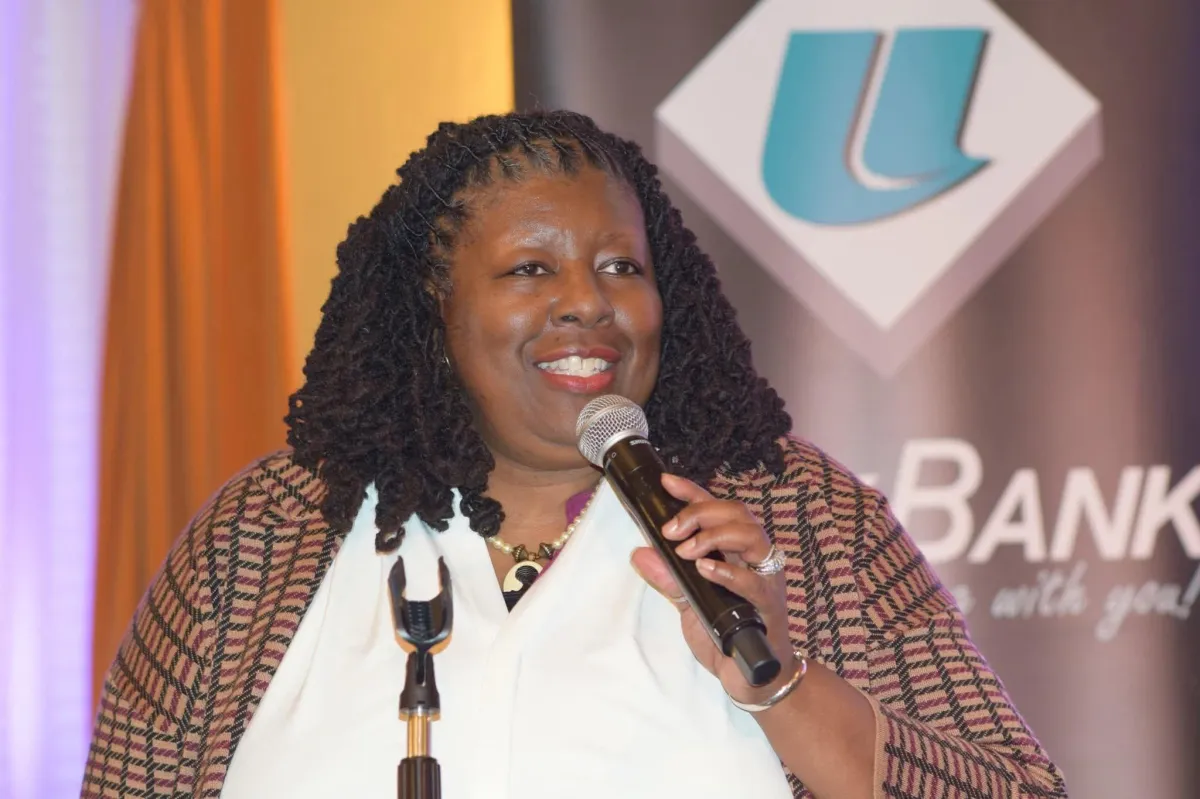
Jevata Crawford is a speaker, author, and transition specialist who brings clarity, structure, and human-centered insight into rooms navigating change.
Her work focuses on moments when something important is shifting—within organizations, communities, families, or systems—and people need language, perspective, and steadiness to move forward with intention.
Jevata doesn’t speak at audiences.
She speaks with them—offering grounded frameworks, cultural insight, and thoughtful reflection that people can apply immediately.
Core Themes
Jevata is invited into spaces where complexity needs to be named without being oversimplified. Her talks and facilitated sessions explore themes such as:
Navigating transition without urgency or fear
Identity, legacy, and decision-making during change
The emotional and cultural weight of “moving”
Creating clarity when systems, roles, or life stages shift
Leading with intention through moments of uncertaint
Each session is grounded in The MOVING Method™, her planning-first framework for understanding change before acting on it.
Audience Experience
Audiences leave with:
clear language for complex experiences
structure they can apply immediately
cultural and behavioral insight
grounded, human-centered guidance
stories told with dignity, depth, and care
Whether speaking to a room of leaders, creatives, caregivers, or change-makers, Jevata’s presence brings calm, coherence, and clarity.
Format
Jevata is available for:
Keynote talks
Facilitated workshops
Moderated conversations and panels
Custom sessions designed for your audience
Formats are shaped around the needs of the room, not pre-packaged agendas.
Jevata Crawford delivers educational speaking engagements, workshops, seminars, and facilitated learning experiences grounded in The MOVING Method™, her structured framework for move management, life transitions, estate clearing, organizational planning, and intentional decision-making. These programs are offered for conferences, organizations, educational institutions, and leadership groups seeking practical education and applied learning around navigating change.
Who This Work Is For
Jevata’s speaking is well-suited for:
Conferences and summits
Professional and community organizations
Leadership teams
Educational and cultural institutions
Groups navigating transition, growth, or redefinition
If your audience is asking “What’s shifting, and how do we move forward with clarity?” — this work belongs in the room.
About the Speaker
Jevata Crawford is the founder of Project MOVE and the creator of The MOVING Method™. She is the author of Moving in Place: More Than Boxes, a reflective and practical guide to navigating transition with clarity and intention.
With a background rooted in social science and years of experience guiding individuals and families through major life transitions, Jevata brings both intellectual depth and grounded compassion to her work.
She is based in the Lehigh Valley, Pennsylvania.
Speaking Inquiries
For speaking invitations, collaborations, or additional information, please reach out through the Contact page.
Download the Speaker Sheet for a concise overview of topics and credentials.
Elite Broker Blogs
━━━━━━━━
The Move Happened When I Used My Voice
A move does not always begin with boxes.
Sometimes it begins when the answer you have always given no longer sounds true.
It was my first interview after being let go.
I remember sitting there, listening to the questions, feeling the weight of everything that had just shifted. My job had ended. My routine had changed. What came next was uncertain.
But I knew how to answer interview questions.
There was a version of me that had learned the safe answers the expected, polished, professional ones. The answers that kept everything in place.
I had used them before.
But this time felt different.
Not because I was more prepared, but because I was more aware of what I actually wanted.
When the questions came, I paused.
Not to search for the “right” answer.
I paused to decide whether what I was about to say was true.
And then I said it.
Not perfectly.
Not polished.
But clearly enough that I could hear myself in the answer.
I could hear what I wanted.
I could hear what I didn’t want.
I could hear what mattered to me now.
And that’s when I realized:
the move had already begun.
The Move Was Not Only the Job Loss
At the time, it would have been easy to point to the obvious change:
I had been let go and needed another job.
That was part of it.
But another move was happening underneath the visible one a quieter, more personal shift.
I was moving away from the answers that helped me fit and toward language that reflected what I actually knew, wanted, and valued.
The interview didn’t create that change.
It revealed it.
The move happened when I stopped answering from the version of myself who knew how to keep everything comfortable and began answering from the person I had become.
That is what Voice makes visible.
Voice Is Not About Saying More
I’ve been sitting with the word Voice, and this is what keeps returning:
Voice is not about speaking louder or saying more.
It’s about recognizing when the words you’re using belong to you.
There is an instinct to adjust —
to say what fits,
to soften what you mean,
to stay within what’s expected,
to keep things comfortable.
Sometimes those adjustments are useful.
They help us communicate with care.
But there are moments when adjusting the language changes the truth inside it.
That’s when Voice asks a different question:
Can I hear myself in what I’m saying?
When Language Changes, Something May Be Moving
One of the earliest signs of a move is a shift in language.
The words that once fit may no longer describe what you know now.
The answer you once gave easily may begin to feel incomplete.
A familiar yes may start sounding like a no.
You may know what you mean but hesitate to say it clearly.
You may find yourself rehearsing, editing, or softening words that are already true.
From the outside, it may look like hesitation.
From the inside, something may be moving.
Your values may be becoming clearer.
Your priorities may be changing.
Your understanding of yourself may no longer fit the language you’ve been using.
That is movement.
You may already be in a move.
Recognizing the Move
At Project MOVE, a move is not limited to relocation.
A move begins whenever there is meaningful distance between where you are and where you know you need to go.
Sometimes that distance is physical.
Sometimes it appears in a decision, a role, a relationship, a responsibility, or the way you’re living in your space.
And sometimes the distance becomes visible in your own words.
You hear yourself give the familiar answer and realize it belongs to an earlier version of you.
You pause before saying yes.
You notice that what sounds right no longer feels true.
Recognition doesn’t require immediate action.
It simply means you’ve begun to see what is changing — and that awareness gives you somewhere honest to begin.
It creates room for grace toward who you were, growth into who you are becoming, and grounding in what is true right now.
The Question I’m Carrying
This week, I’m paying attention to the places where I may still be speaking from habit instead of alignment.
Where am I saying what fits instead of what’s true?
Where am I softening something, I already know?
What needs to be said in my own words?
The move may not happen when the perfect words arrive.
It may happen in the moment you recognize your own voice —
and choose not to leave it behind.
Start Where You Are
Start With a Word: Voice is a guided journaling practice and practical application of the MOVING Method™.
It helps you notice the language you’re using, name what you know to be true, and explore how you want to say it now.
It gives you space to move from recognition into reflection —
and from reflection toward one clear next move.
Because before you can plan what comes next,
you have to recognize what is already moving.
FOLLOW US
Facebook
Instagram
LinkedIn